


Locating the best providers for door-to-door car transport can save time, minimize hassle, and keep your car safe during a relocation or sale or purchase, so planning carefully pays off; door to door vehicle transport means a carrier will collect and deliver your car near to specified addresses instead of requiring a drop it at a terminal, and this complete guide covers what door to door car shipping involves, how costs and coverage work, ways to evaluate companies, and practical tips for a seamless delivery.
When companies advertise door to door car delivery to door vehicle shipping service, the process usually starts with a pickup slot at the location you give — whether that’s your home, office, or another mutually agreed spot — and finishes with delivery to the destination location; this phrasing doesn’t guarantee the courier will enter a private driveway because access restrictions, municipal codes, or narrow streets might force the carrier to use the nearest safe curbside or commercial loading zone. The collection window and delivery window provided are typically several-day periods instead of specific hours. A collection slot is commonly scheduled based on the carrier route and the overall route and transit duration. If you choose expedited car shipping or express door to door vehicle transport service, you can often get tighter windows and faster routing for an extra charge.
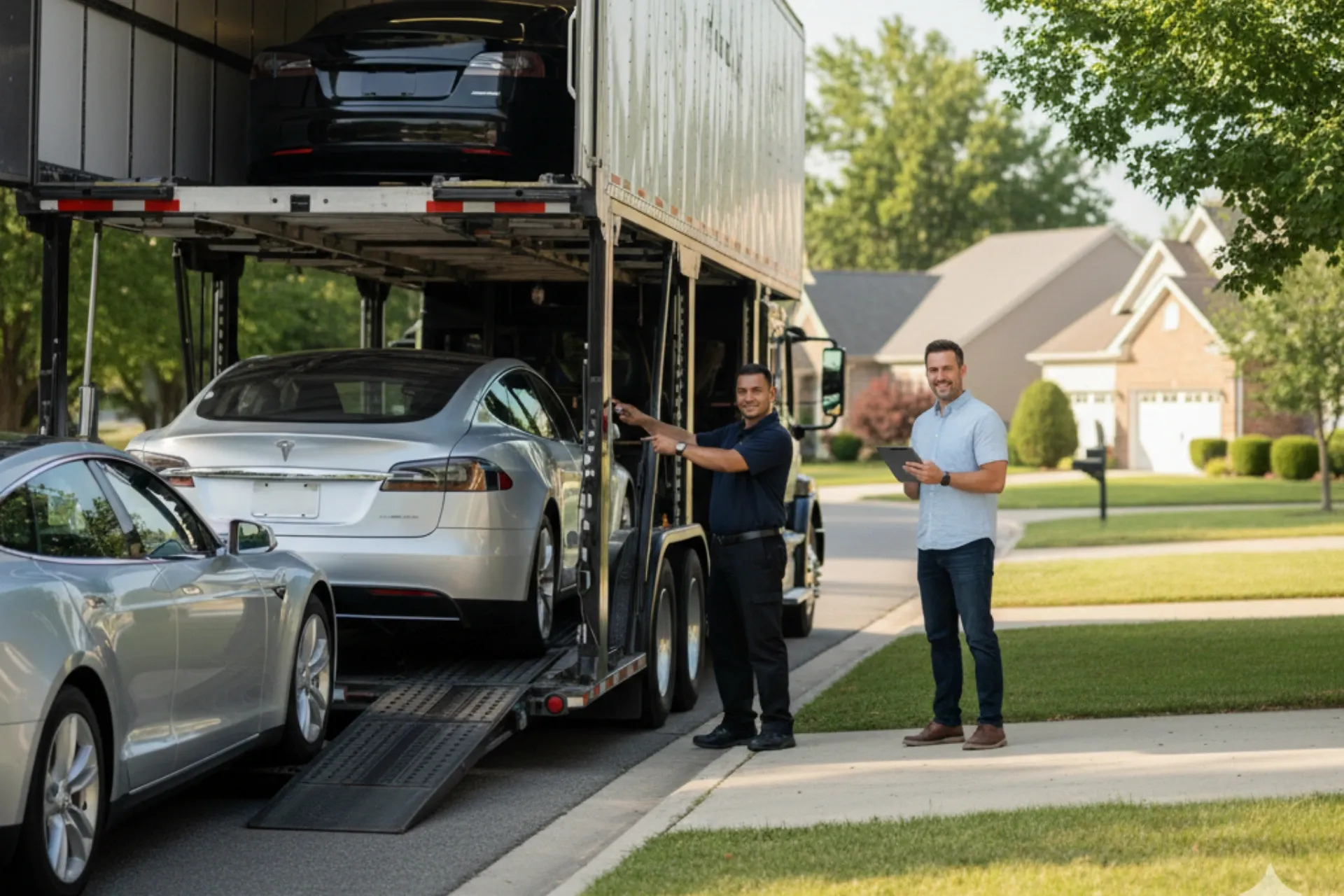
Open-air carrier vs. covered door-to-door vehicle transport Open-air car transport is the most common and cost-effective option. Vehicles are carried on multi-vehicle open trailers exposed to the elements but securely fastened; the lower cost makes this attractive for everyday cars. Enclosed door to door vehicle shipping for classic cars, luxury vehicles, or high-value restorations provides a covered trailer and extra protection from weather, road debris, and prying eyes. Is enclosed or open door to door transport better? The answer depends on value, condition, and owner tolerance for risk—enclosed adds cost but reduces exposure. For international shipments, enclosed containers or specially configured trailers are often used to protect vehicles during longer transit and handling.
Understanding pricing, estimates, and transit times for door-to-door vehicle transportation depends on mileage, vehicle size, the corridor and travel time, the seasonality, and whether you select an open trailer or an enclosed trailer. Quick door-to-door car shipping estimate tool tools can give fast numbers, but budget auto transport estimates are frequently subject to change and may shift if pickup location or dropoff conditions differ from what you stated. Do guaranteed door to door vehicle transport quotes exist? Some transporters will provide guaranteed quotes once routes and dates are confirmed; brokers usually offer estimates that remain subject to change. You should compare car shipping estimates from several auto carriers and ask whether the price accounts for fuel charges, tolls, and extra fees.
How long does door to door delivery take depends on route and transport method. State-to-state car shipping between adjacent states can take a few days; cross-country shipments commonly take one to two weeks. Door-to-door car shipping timeframes and transit estimates should be provided as ranges. Expedited transport and expedited car shipping options reduce transit time for extra cost and are useful when timing is critical
For door to door auto transport, typical Documents, inspections, and claims include What required items such as a valid driver license, registration, ownership proof or title when requested, plus any customs papers for international shipments; The BOL is central — it serves as the contract and the vehicle condition report that records existing dings, scratches, and odometer reading at pickup. How this document functions for claims is simple: keep your copy, examine the vehicle on delivery immediately for new damage and check findings against the vehicle condition report; If you find damage, note it on the BOL and take photos of the vehicle before the transporter leaves. Want to file a claim following door-to-door delivery? Notify the transporter and the broker (if used), submit the bill of lading, photos, and backup documents, and adhere to the carrier liability and insurance claim procedures. About transport insurance: carriers carry a minimum liability by default; for comprehensive protection you can buy additional coverage or confirm that the carrier’s policy covers full replacement value; Ask specifically whether the insurance covers loss, theft, and damage on open transport compared with enclosed trailers.
How to select a trustworthy door-to-door auto auto shipper Advice for selecting door-to-door vehicle shipping service commence by vetting credentials: verify carrier liability coverage, USDOT and other required registrations, and whether the company acts as a broker or a direct carrier. An auto transport broker arranges shipments and dispatches carriers; a direct carrier operates the transport trucks. Review door to door auto transport reviews and ask for references. Obtain a itemized quote with pickup appointment flexibility, a definite delivery window, and an explanation of binding vs. non-binding rates. Look for clear payment terms, written contracts or agreements, and clear descriptions of liability and insurance. Consider providers that offer a vehicle condition report, a copy of the bill of lading in advance or at pickup, and a responsive customer service line for status updates and delivery window changes.
Collection and delivery considerations How door to door vehicle delivery collection and dropoff works starts with preparing your vehicle: clean it for inspection, remove personal items, turn off alarms, and check fluids and battery health. At collection, walk the driver around the vehicle and confirm the condition report. At delivery, inspect again before the driver leaves and use the bill of lading to document acceptance or disputes. Door-to-door vehicle shipping to Hawaii and other island destinations often involves roll-on/roll-off ferry or container transport with additional port handling and timelines; door-to-door international vehicle shipping options require customs and export/import documentation
When selecting the best providers for door-to-door car transport, balance cost with delivery time, insurance, and the type of carrier you choose; know how door-to-door differs from terminal to terminal shipping, pick open carrier or an enclosed carrier according to vehicle value, and insist on transparent documentation such as the bill of lading document and the inspection report; obtain and compare several door to door car shipping quotes, confirm liability coverage and regulatory compliance, and ready your vehicle and paperwork ahead of collection; following these actions will help you find a trustworthy door-to-door freight provider and minimize surprises during transport.